Reference directory
Network of automated biology facilities across the United Kingdom
Biofoundries pair robotics, software and molecular biology to design, build and test engineered organisms at scale. The UK has a network of five key facilities, each with their own specialisms, but also working collaboratively to advance the UK's capabilities in engineering and synthetic biology.
This directory maps the UK's facilities — where they are, what they work on, and who runs them.
The directory
5 facilities
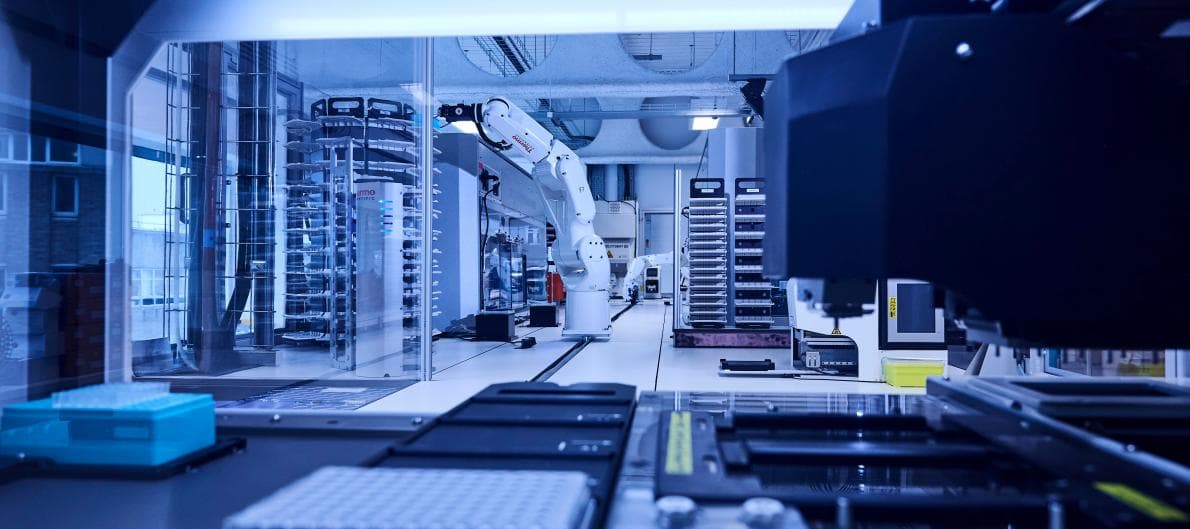
Edinburgh Genome Foundry
Fully automated robotic assembly of DNA constructs up to a megabase, host-agnostic across bacterial, yeast, plant and mammalian chassis.
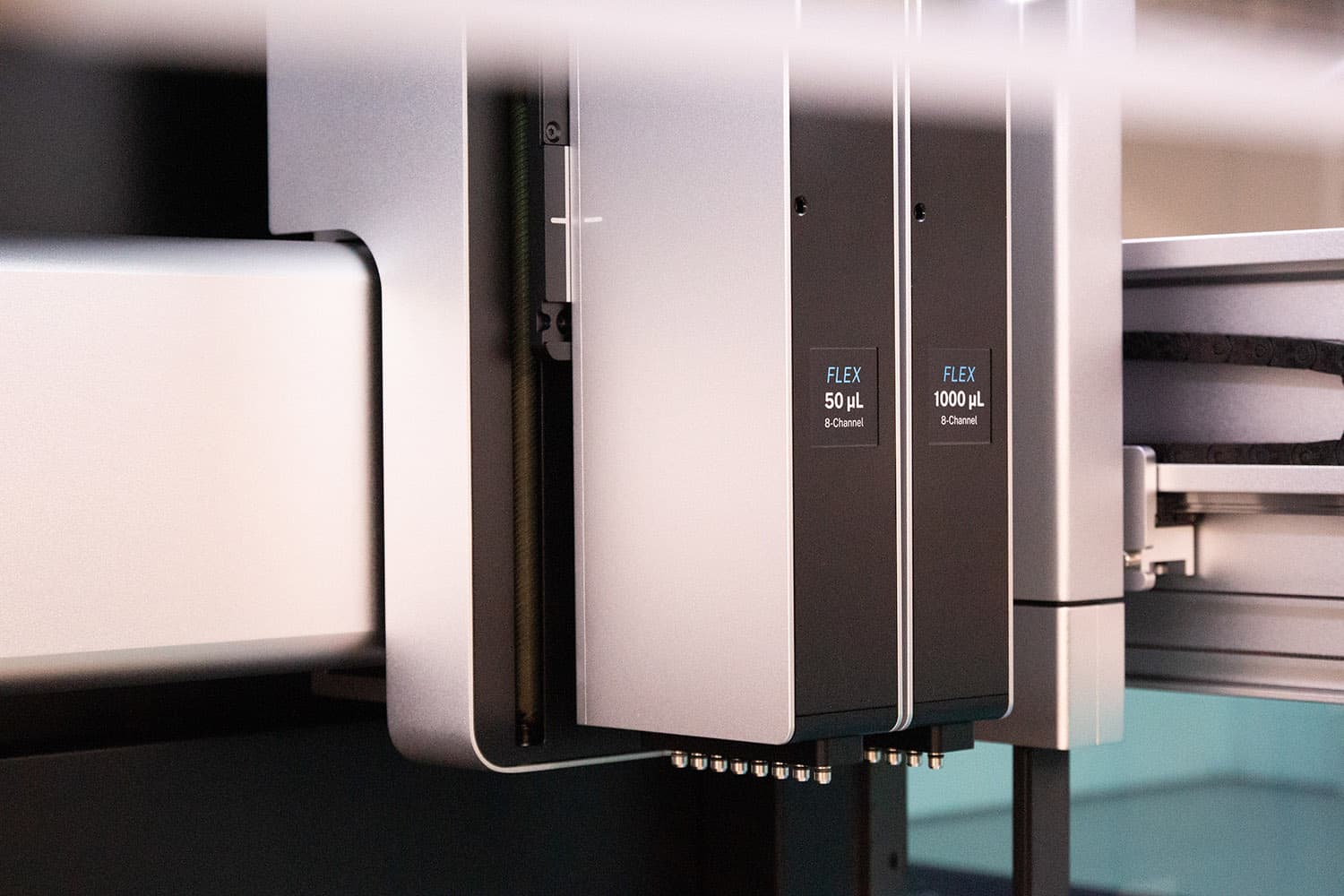
Earlham Biofoundry
A National Bioscience Research Infrastructure supported by BBSRC, with automation capabilities for plant and microbial systems.
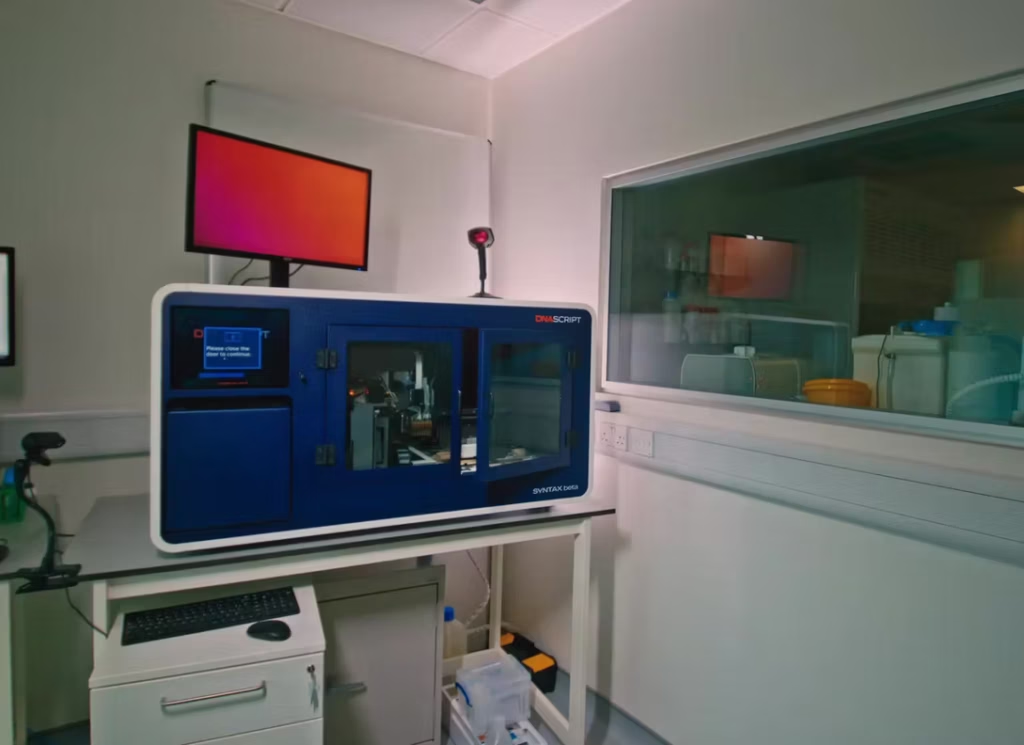
London Biofoundry
End-to-end design–build–test–learn capability for strain engineering and cell-free systems; reconfigured its robots for COVID-19 diagnostics in nine days.
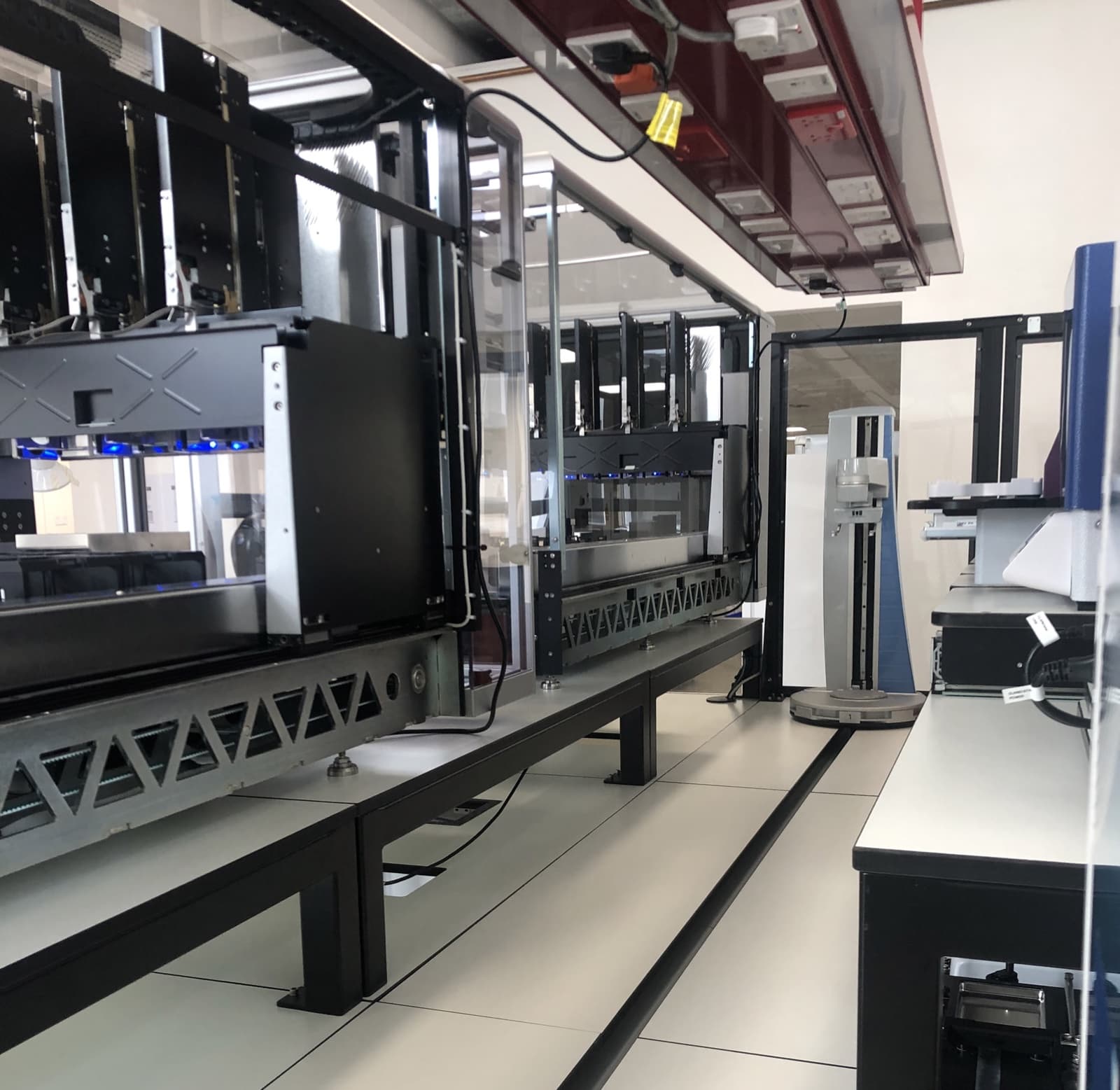
Manchester Biofoundry
A UK and European Centre of Excellence for synthetic biology, opening greener routes to bioderived chemicals and natural products through engineering biology.
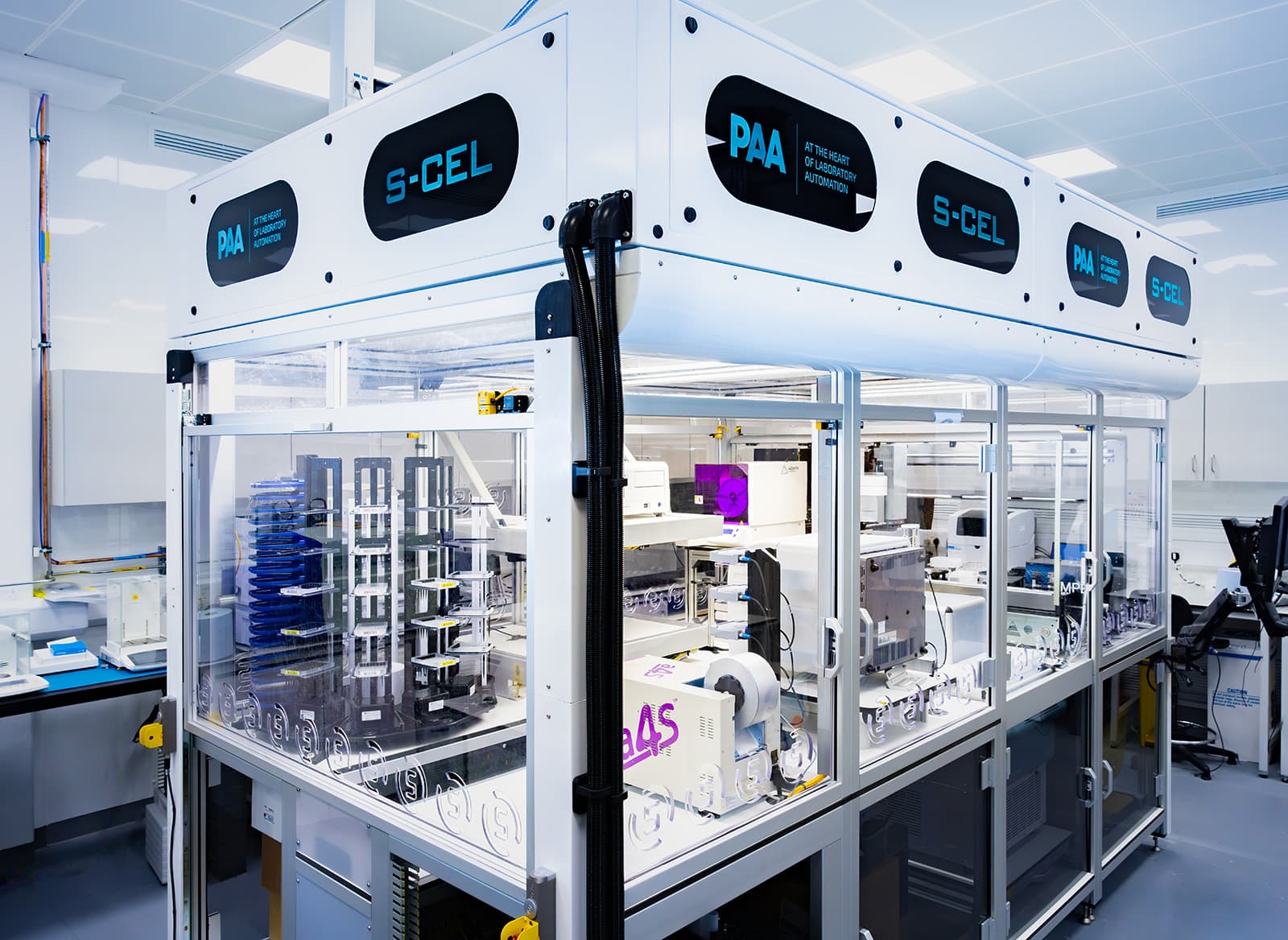
UK Reference Biofoundry
The UK's metrology biofoundry, providing the standards, reference materials and analytical methods that make engineering-biology data reliable and reproducible.
What is a biofoundry
Infrastructure for engineering biology
A biofoundry is a facility that automates the design–build–test–learn cycle of synthetic biology. Liquid-handling robots, acoustic dispensers and colony pickers assemble and screen DNA constructs at volumes and throughputs that manual work cannot reach.
The UK built its foundries through a coordinated national investment in engineering biology. Each has its own specialism — from megabase DNA assembly and speciality-chemical production to the measurement standards that keep results reproducible.